Pigmentation forms when certain skin cells called melanocytes are triggered (e.g. by UV exposure or hormonal fluctuations) and generate more melanosomes (little melanin packages) using an enzyme called tyrosinase. These melanosomes are deposited by the melanocytes into surrounding keratinocyte (skin cells). As the skin cycle continues, the newer melanosome-containing keratinocytes rise to the surface of the skin, causing visible areas of hyperpigmentation.
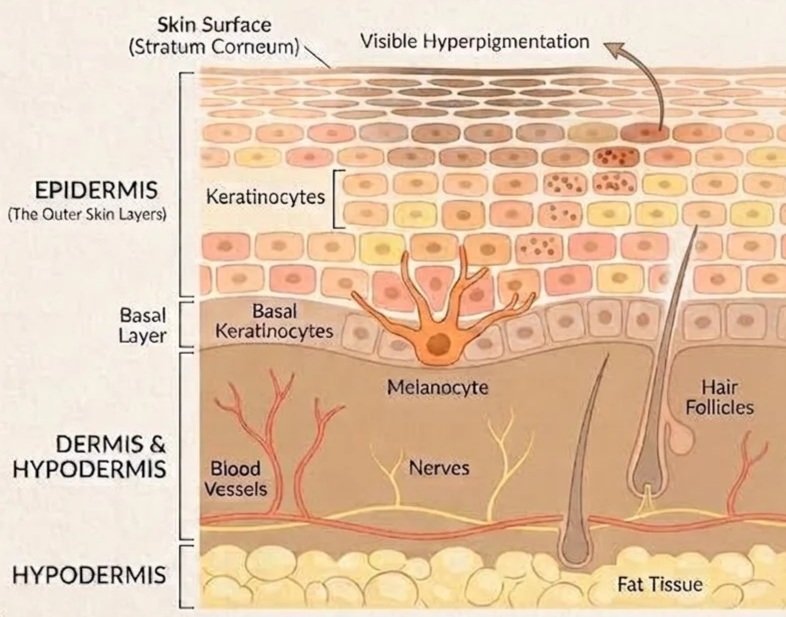
Modern ingredients target different stages of this pigmentation pathway to try and reduce the appearance of pigmentation or prevent the skin’s ability to generate pigmentation.
Vitamin C - inhibits the tyrosinase enzyme to reduce melanin synthesis
Niacinimide - inhibits melanosome transfer to keratinocytes
Retinol - reduces melanosome size, reduces melanosome transfer to keratinocytes, increases cell turnover to exfoliate pigmented-containing skin keratinocytes
AHAs - increases cell turnover to exfoliate pigmented-containing skin keratinocytes
Azelaic acid - disrupts synthesis of melanocytes, appears to have selective action on hyperactive/abnormal melanocytes (e.g. lentigo maligna)
References:
Al-Niaimi, Firas, and Nicole Yi Zhen Chiang. "Topical vitamin C and the skin: mechanisms of action and clinical applications." The Journal of clinical and aesthetic dermatology 10.7 (2017): 14.
Marques, Cíntia, et al. "Mechanistic insights into the multiple functions of niacinamide: Therapeutic implications and cosmeceutical applications in functional skincare products." Antioxidants 13.4 (2024): 425.
Quan, Taihao. "Human skin aging and the anti-aging properties of retinol." Biomolecules 13.11 (2023): 1614.
Karwal, Kanwarpreet, and Ilya Mukovozov. "Topical AHA in dermatology: Formulations, mechanisms of action, efficacy, and future perspectives." Cosmetics 10.5 (2023): 131.
Fitton, Andrew, and Karen L. Goa. "Azelaic acid: a review of its pharmacological properties and therapeutic efficacy in acne and hyperpigmentary skin disorders." Drugs 41.5 (1991): 780-798.
